
- Commercial Greenhouse
- Film Greenhouse
- PC Greenhouse
- Glass Greenhouse
- Tunnel Greenhouse
- Scientific Research Greenhouse
- Vegetable Greenhouse
- Flower Greenhouse
- Multi-span Greenhouse
- Sawtooth Greenhouse
- Greenhouse Equipments
- Greenhouse Accessories
- Hot Dip Galvanized Pipe
- Irrigation System
- Hydroponics System
- Planting Tools
- Planting technology
Tel: +86 191 5068 3942
Fax:
Mobile: +86 191 5068 3942
Contact: Alina
E-mail: sales@cngreenhouses.com
SKYPE:


Greenhouse Cover: Light Transmission and Condensation
Clear 6 mil greenhouse cover on a 64x40 m house: what it lets through to the crop, why condensation forms inside, and how the side vents manage it.
.
TEL:+86 191 5068 3942
- Features


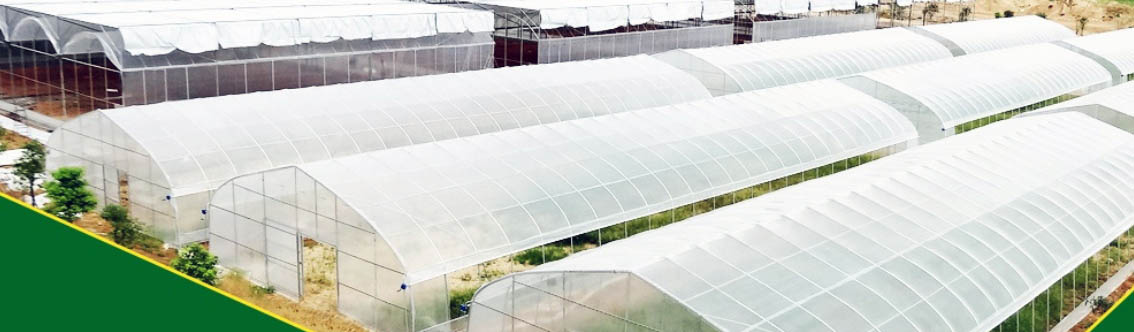
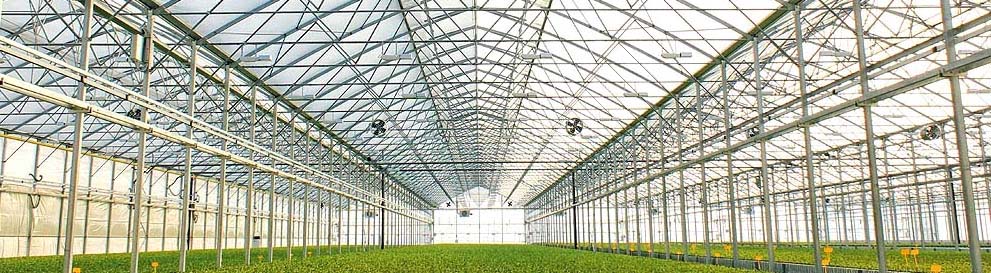
This page is about the two things a clear greenhouse cover does that no other part of the house does: it lets light through to the crop, and it holds water vapour inside instead of letting the weather take it away. The house it is written around is a commercial film greenhouse at 64 m by 40 m, 2,560 square metres, covered with standard clear greenhouse film at 6 mil, which is about 0.15 mm, in a single or double layer on a hot dip galvanized steel pipe frame. The film is described on the sheet as ultra-high transparency that maximises sunlight for photosynthesis, with a 100% waterproof design that locks in humidity and blocks rain and dew damage. What follows stays with those two jobs: what the sheet passes on, where the water that stays inside ends up, and what both of them mean for the crop underneath.
| Size | 64 m x 40 m |
| Area | 2,560 square metres |
| Type and scale | Film greenhouse, middle scale |
| Cover | Standard clear greenhouse film, 6 mil (about 0.15 mm) |
| Layer | Single or double |
| Covering material thickness | 0.15 mm or 0.12 mm |
| Materials | Plastic and mesh |
| Frame | Hot dip galvanized steel pipe |
| Span | 6.4 m, 8 m, 9.6 m or 10 m |
| Total structure height | 4.3 m to 6.5 m |
| Wind load | 0.35 kN/m2 |
| Ventilation | Sidewall openings covered by insect nets and roll-up curtains, manually or electrically operated |
| Application | Vegetable, fruit, flower, seed nursery |
| Export markets | Global |
Light Transmission: What the Clear Sheet Passes On
The covering on this house is chosen for what it lets through rather than for what it keeps out. The sheet specified is standard clear greenhouse film at 6 mil, about 0.15 mm, and it is described as a material with ultra-high transparency that maximises sunlight for photosynthesis, with excellent light transmission listed among the properties the covering is bought for. That ordering is not a marketing habit. Light is the raw material of the crop: photosynthesis runs on the light that reaches the leaf, so the light arriving under a cover sets the ceiling on how much growth the same soil, water and fertiliser can carry. Two houses with the same frame, the same beds and the same crop can finish a season differently because one covering passed more light than the other.
A clear film earns its place in two ways that are easy to take for granted. It transmits light that a solid roof would stop, so a crop can be grown through weather that would otherwise keep it under glass or under nothing; and it does that while still excluding rain, which is the trade a fleece or an open field cannot make. Because the film is the surface the light crosses, anything that changes that surface changes the crop: dust and dirt on the outside of the sheet, shading that hangs over the roof, and the water that forms on the inside of the film at night all take light away from the plant before it arrives.
The layer choice on this model is single or double, and it belongs on this page because it moves light and warmth in opposite directions. A single sheet puts one film between the sky and the crop, which is the arrangement that passes the most light through to the canopy. A double layer adds a second sheet with air trapped between the two, which is bought for warmth and for reducing heat loss, and it takes a share of the light in exchange. Which of the two a site wants is a decision about the crop and the climate rather than about the film, and the house as offered can be covered either way.
Why the House Holds Humidity
The second job of the cover is the opposite of the first. A clear film is close to transparent to light, and it is also close to closed to water: the covering on this house is specified as a 100% waterproof design that locks in humidity and blocks rain and dew damage. Read together with the rest of the sheet, which lists protection against heat loss and cold air intrusion, good insulation properties and low energy consumption, that describes a house run as a closed volume for most of the day. Water that the crop draws from the soil and releases through its leaves as vapour stays inside the volume instead of being carried off by the wind.
That is deliberate, and it is the reason a film house can hold a canopy in air that is drier than the crop would like. Humidity around the leaves is what keeps stomata open and transpiration moving, and a covered house keeps that band of moist air where the crop can use it. The waterproof side of the same property is what makes the crop independent of rainfall: rain is stopped at the sheet, so irrigation is planned rather than waited for, and dew that would settle on an open crop at dawn is intercepted by the film above it. A grower who has lost a flower crop to a wet night outdoors recognises what that is worth.
The same property creates the phenomenon this page is mostly about. A film that lets almost no water vapour out holds the vapour the crop produces, and the vapour has to go somewhere at night, when the air inside cools and cannot hold it all. What it does next is set out in the next section.
Where the Condensation Comes From
Condensation inside a film house is not a fault in the film. It is the predictable result of three ordinary things happening at the same time: a warm, moist body of air inside the house, a thin sheet of film that loses its heat quickly, and the drop in temperature that comes with the end of the day. The crop and the soil put water vapour into the air all day. When the sun goes, the air inside cools, and cool air holds less water vapour than warm air does. The film cools faster than the air around it, because it is thin and it faces the open sky, and it is the coldest surface in the house. Water vapour that can no longer stay in the air finds that surface and condenses on it, on the inside face of the sheet, where the vapour meets it.
That is why the water appears on the film before it appears anywhere else, and why the load of it is heaviest just before and just after dawn. It is also why the amount is not fixed from one house to the next. A house with a full canopy and freshly irrigated beds has more vapour in it than a house with young plants and dry soil; a still, clear night gives the film a colder surface than a windy or overcast one; and a house that has been closed all night holds more than one that was vented at sunset. The droplets start as a fine film on the sheet, grow where the film is coldest, and then run down the inside of the cover under their own weight.
Where the water finally goes is decided by the shape of the house rather than by the film. Water that runs down the inside of the cover and reaches an edge carries on down the frame to the base and out; water that reaches a dip, a low point or a place where the sheet is not tight falls back into the crop below it. That distinction is the whole difference between condensation that is a nuisance to look at and condensation that costs money.
What Droplets on the Film Cost the Crop
The cost shows up twice, once in light and once in water. In light, droplets on the inside of the sheet scatter and reflect part of the light that would otherwise pass through, so the roof that was clear when the sun went down is a field of small lenses by dawn. The loss matters most at the time of day it happens, because the first light of the morning is the light the crop has been waiting for through the coldest hours, and a house whose cover is beaded with water gives up a share of it before the day has started.
In water, the cost is what the droplets do when they leave the film. Water that drips from the cover onto the leaves keeps the foliage wet for hours in still air, and a wet leaf surface is the condition most leaf diseases need to start. Dripping water on a flower crop marks flowers that are being cut for sale, and drip on fruit leaves blemishes that reduce the grade. Drip also lands on the crop cold, which is unwelcome in a house that has just spent the night holding warmth in, and it lands on the soil and the paths, which makes the working environment inside the house wet at the time of day when the crew is in it.
There is a second effect that is easy to miss: a house that is wet inside is a house where the humidity has stopped doing its job and started doing damage. Water sitting on the leaves after dawn is water that cannot be used by the crop, because the crop takes water from the soil and not from its own surface, but it can still carry disease. Managing the water inside the cover is therefore part of managing the crop, not maintenance of the building, and it is done with the parts the house already has.
How This House Manages the Water
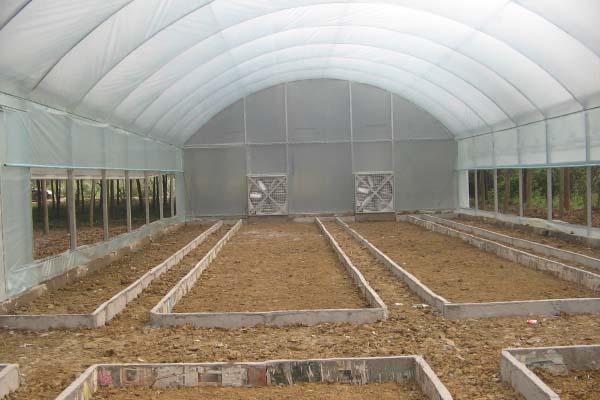
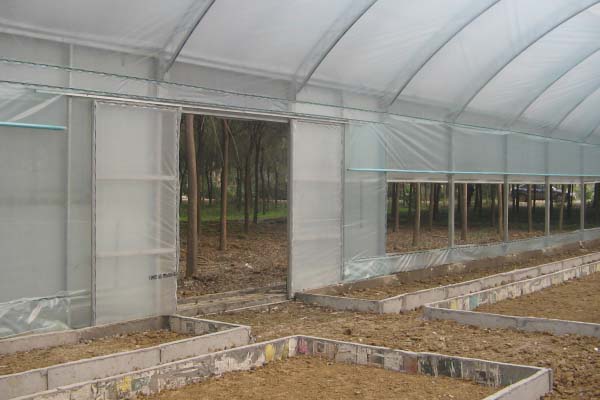
Ventilation is the tool, and this model is built with it: ventilation by sidewall openings covered by insect nets and roll-up curtains, manually or electrically operated. Opening the side walls in the morning lets the vapour that has collected overnight leave the house and drier air come in behind it, which lowers the humidity inside and, with it, the amount of water the film has to take. Because the opening is a roll-up curtain rather than a fixed window, the area can be opened as far as the weather allows and no further, and because it is covered by an insect net the opening can be used on a crop that has to stay protected while it is open.
On a house of 2,560 square metres with a canopy under it, the timing matters as much as the opening. Venting early, while the outside air is still cool and the house has not yet been warmed by the sun, moves the humid air out without losing the warmth the covering was bought for; leaving the house closed until the sun is high leaves the water with no way out and it comes back down onto the crop. On a wet or misty morning there is less to be gained, because the air coming in is nearly as moist as the air going out, and the better answer is air movement inside the house rather than a wide opening.
Two habits support the ventilation rather than replacing it. Keeping the outside of the cover clean protects the light transmission the film was chosen for, since the same surface has to do both jobs. And keeping the house closed only as long as it needs to be keeps the humidity inside the range the crop wants, which is what the 100% waterproof design is for: the house is meant to hold moisture, not to hold water on the leaves. Where a crop needs more air movement than side wall openings give it, the systems listed further down this page are ordered with the house.
The Frame Behind a Clear Cover
The structure under the film is a hot dip galvanized steel pipe frame, and the advantage given for that choice is a plain one: the pipe is used to avoid rust. The reference house on this sheet runs to 64 m by 40 m, or 2,560 square metres, at a span of 6.4 m, 8 m, 9.6 m or 10 m, with a total structure height of 4.3 m to 6.5 m, and it is checked for a wind load of 0.35 kN/m2. The covering suggested for it is the ideal application for a single or double layer of greenhouse film, and the house may only be covered by polyethylene held with aluminum clips.
How the clear sheet is run, tensioned and held on that frame is the subject of its own page, and it is covered step by step on our film greenhouse installation page. The narrower house in the range, where one arch roof spans the whole width, is described on our single span film house page. How light and water behave under different covering systems is a subject the industry follows house by house, and the practical side of it, from the grower rather than from a supplier, is published by the NGMA.
What Comes With the House, and What Can Be Added
The advantages on the sheet sit under the covering rather than beside it, and they are the ones that decide whether the two jobs of the film can be used: a simple and effective solution for varied and complex topographic conditions, hot dip galvanized pipe to avoid rust, a frame of hot dip galvanized steel pipe, a span of 6.4 m, 8 m, 9.6 m or 10 m, a total structure height of 4.3 m to 6.5 m, a covering material thickness of 0.15 mm or 0.12 mm, effective prevention of heat loss and cold air intrusion, an arch roof, and a house that is suitable for all climate conditions and adaptable to any type of landscape.
| Cover | Standard clear greenhouse film, 6 mil, single or double layer |
| Warmth | Prevents heat loss and cold air intrusion, with good insulation properties and low energy consumption |
| Roof | Arch roof, which sheds water off the covering instead of leaving it standing |
| Ventilation | Sidewall openings with insect nets and roll-up curtains, manually or electrically operated |
| Cover fixing | May only be covered by polyethylene held with aluminum clips |
| Site | Simple and effective solution for varied and complex topographic conditions, adaptable to any type of landscape |

Systems to support the crop inside the clear shell can be added to the order, depending on the customer request, and the two that act most directly on the light and water described above are the ventilation system and the shading system.
| Cooling and heating system | Holds the temperature the crop needs when the outside air will not |
| Irrigation system | Water delivered under a covering that keeps rain out, so it can be planned |
| Ventilation system | Moves air through the house and helps carry overnight vapour out |
| Fertilization system | Feeding matched to the light the house can deliver that week |
| Shading system | Cuts the strongest light, the other end of the same variable |
| Benches | Lifts nursery and pot work towards the light and to working height |
Which Crops Sit Under This Cover
The house is used for vegetables, fruit, flowers and seed nursery work, and crops such as tomatoes and cucumbers are named on the sheet as the sort of crop that thrives in it all year round. Those crops belong under a clear cover for the same reason the nursery does: they are light-driven and warmth-sensitive at the same time. A tomato or cucumber crop responds to the light that reaches it and stops when the temperature drops behind it, and a clear single layer gives it the most of the first while the pipe frame and the closed covering take care of the second. Nursery work on the same house is the same argument in a smaller plant: seedlings are grown for the light they receive, and the house holds them in a volume where that light is steady.

Flower crops sit between the two, and the difference they make to this page is the one about drip: a flower that is cut for sale loses value when water marks it, so a house used for cut flowers wants the water on the cover to be managed rather than watched. Fruit under a film cover has the same concern at a lower grade of tolerance. How commercial growers set their houses around the crop they are cutting that week, and how covering systems perform for those crops, is reported month by month by HortWeek.
How It Is Packed and What Can Be Ordered With It
The house travels in three groups: metal structures, covering system and install accessories. Custom-cut lengths are available on many greenhouse film styles, so the exact amount of film a house needs can be ordered rather than worked out on site, and the covering arrives ready to be run and fixed on the frame. The parts themselves, and the way the groups are made up, are set out on the film greenhouse parts page, and the house is backed by a long-term structural warranty.

Worldwide Cooperation and Contact
We ship to customers all over the world every year. We have a professional engineer department, and if a customer requests it we can send our engineers to foreign countries to guide the installation. Many customers visit our factory each year for business cooperation, and the questions they ask most often about a clear cover are the ones answered above: how much light the film passes, and where the water that the crop releases ends up.

If you need to ask a question and get some help to find the best greenhouse for you, call us on +86 191 5068 3942 or send an e-mail to sales@cngreenhouses.com. Tell us the crop, the climate the house will work in and whether the cover is to be a single or double layer, and the film, the ventilation and the systems that suit them can be priced together. The rest of the polyethylene covered range is on our film greenhouse range page.
Frequently Asked Questions
Q: What does the clear cover let through to the crop?
Light, and as much of it as the film can pass. The covering specified for this house is standard clear greenhouse film at 6 mil, about 0.15 mm, described as ultra-high transparency that maximises sunlight for photosynthesis, with excellent light transmission among the properties it is bought for. Light is the input the crop runs on, so that transmission sets how much growth the same soil and irrigation can carry, and a single layer passes the most of it.
Light, and as much of it as the film can pass. The covering specified for this house is standard clear greenhouse film at 6 mil, about 0.15 mm, described as ultra-high transparency that maximises sunlight for photosynthesis, with excellent light transmission among the properties it is bought for. Light is the input the crop runs on, so that transmission sets how much growth the same soil and irrigation can carry, and a single layer passes the most of it.
Q: Why does water form on the inside of the film?
Because the house holds the vapour the crop releases and the film is the coldest surface in it. The crop and the soil put water vapour into the air through the day, the covering is specified as 100% waterproof so that vapour stays inside, and at night the thin film loses its heat to the sky and drops below the point where the air can hold its water. The vapour then condenses on the inside face of the sheet, most heavily around dawn.
Because the house holds the vapour the crop releases and the film is the coldest surface in it. The crop and the soil put water vapour into the air through the day, the covering is specified as 100% waterproof so that vapour stays inside, and at night the thin film loses its heat to the sky and drops below the point where the air can hold its water. The vapour then condenses on the inside face of the sheet, most heavily around dawn.
Q: Is that condensation on the cover a problem for the crop?
It is a problem when it falls back into the house. Droplets on the sheet scatter and reflect part of the light that would otherwise reach the crop, which costs the most at first light. When they run down and drip onto the plants, a wet leaf surface is what leaf diseases need, drip marks flowers and fruit that are being cut for sale, and the working floor stays wet. Water that runs to the edges of the cover and away down the frame costs nothing.
It is a problem when it falls back into the house. Droplets on the sheet scatter and reflect part of the light that would otherwise reach the crop, which costs the most at first light. When they run down and drip onto the plants, a wet leaf surface is what leaf diseases need, drip marks flowers and fruit that are being cut for sale, and the working floor stays wet. Water that runs to the edges of the cover and away down the frame costs nothing.
Q: How is the humidity managed on this house?
By ventilating with the openings the model is built with: sidewall openings covered by insect nets and roll-up curtains, manually or electrically operated. Opening the walls in the morning lets the overnight vapour out and drier air in, and because the opening is a roll-up curtain it can be set to whatever the outside weather allows. On a wet morning the better answer is air movement inside the house rather than a wide opening, which is what the ordered ventilation system adds.
By ventilating with the openings the model is built with: sidewall openings covered by insect nets and roll-up curtains, manually or electrically operated. Opening the walls in the morning lets the overnight vapour out and drier air in, and because the opening is a roll-up curtain it can be set to whatever the outside weather allows. On a wet morning the better answer is air movement inside the house rather than a wide opening, which is what the ordered ventilation system adds.
Q: Does the cover keep rain and dew off the crop?
Yes. The covering is a 100% waterproof design that blocks rain and dew damage as well as locking in humidity, so the crop is not rained on and the dew that would settle on it outdoors is intercepted above it. That is what lets irrigation be planned rather than waited for, and it is the reason a clear film house is used for crops whose quality is affected by water on the leaf or on the flower.
Yes. The covering is a 100% waterproof design that blocks rain and dew damage as well as locking in humidity, so the crop is not rained on and the dew that would settle on it outdoors is intercepted above it. That is what lets irrigation be planned rather than waited for, and it is the reason a clear film house is used for crops whose quality is affected by water on the leaf or on the flower.
Q: How long does the galvanized frame last before maintenance?
It depends on the corrosivity of the air around the site. Under ISO 9223 a standard galvanized coating gives about 13 years to first maintenance in heavy industrial air (class C4), about 30 years in urban conditions (class C3), about 50 years in coastal conditions (class C5), and 50 years or more without repair in clean suburban conditions (class C2). The pipe on this house carries a specified average coating of 70 to 85 micrometres of zinc under BS EN ISO 1461, assessed against BS EN ISO 14713-1, and every cut and drilled point made during the build is treated afterwards.
It depends on the corrosivity of the air around the site. Under ISO 9223 a standard galvanized coating gives about 13 years to first maintenance in heavy industrial air (class C4), about 30 years in urban conditions (class C3), about 50 years in coastal conditions (class C5), and 50 years or more without repair in clean suburban conditions (class C2). The pipe on this house carries a specified average coating of 70 to 85 micrometres of zinc under BS EN ISO 1461, assessed against BS EN ISO 14713-1, and every cut and drilled point made during the build is treated afterwards.
Note: If you're interested in the product, please submit your requirements and contacts and then we will contact you in two days. We promise that all your informations won't be leaked to anyone.
 Deutsch
 Español
 Français
 Italiano
 Português
 日本の
 한국어
 العربية
 български
 hrvatski
 česky
 Dansk
 Nederlands
 suomi
 Ελληνικά
 हिन्दी
 norsk
 Polski
 Română
 русский
 Svenska